Magistrate Court Chester County is often the first place where local legal matters begin. It serves as an entry-level court for many everyday cases in the community. Residents may come here for traffic tickets, small claims disputes, landlord-tenant issues, or minor criminal charges. This court is part of the local court system in PA and helps handle cases quickly. It supports fair decisions at the community level. Many people interact with this court before any higher court becomes involved.
The chester county magistrate court plays an important role in the minor judiciary Pennsylvania structure. It operates through district judge offices that manage early hearings, warrants, and preliminary steps in criminal cases. Many disputes are resolved here without needing a trial in a higher court. This makes the process faster and more practical for local residents. Cases like summary offenses and small civil claims often start and finish at this level. It remains a key part of Chester County’s local justice process.
What Is the Magisterial District Court in Chester County PA?
The Magisterial District Court in Chester County, PA is the local court where many cases begin, such as traffic tickets, small claims, and preliminary criminal hearings. It serves as Pennsylvania’s first-level judiciary, handling everyday legal matters close to the community. The magisterial district court Chester County plays an important role in the state court system. It is often the first place residents deal with legal disputes or minor offenses. These courts help resolve smaller matters quickly and locally. They also manage early steps in criminal cases before anything moves forward. This makes the process more organized for both the public and the county courts.
A Magisterial District Court is a local Pennsylvania court that handles lower-level legal cases. Chester County Court has multiple district courts serving different communities. These courts focus on quick hearings and practical decisions. Many people know them as a minor case court PA since they deal with everyday disputes. They are often the starting point for civil claims and summary offenses.
Common matters handled include:
This court handles many routine legal issues that affect residents directly. It provides a nearby place to resolve disputes without going to a higher trial court. These cases are usually simpler and move faster than major court proceedings. People often appear without attorneys in smaller claims. The court still follows legal rules while keeping procedures easier to manage.
- Traffic violations and citations
- Landlord–tenant disputes (rent claims, evictions)
- Small claims cases under set limits
- Summary offenses like disorderly conduct
- Preliminary hearings for criminal charges
Magistrate Court vs County Court: Key Differences
Many people confuse the magisterial district court with the county-level Court of Common Pleas. Both courts are part of Pennsylvania’s judicial system, yet they handle different case levels. The magisterial court focuses on minor disputes and early criminal steps. County courts handle serious trials, larger lawsuits, and family law matters. Knowing this difference helps residents understand where their case belongs.
Main differences between the courts:
The biggest difference is the type of authority each court has. Magisterial courts manage smaller legal matters and first hearings. County courts manage full trials, jury cases, and final rulings. In many situations, a case may begin in magisterial court and later move up. This structure keeps the court system efficient across Chester County.
| Feature | Magisterial District Court | Chester County Court (Common Pleas) |
|---|---|---|
| Court Level | First-level judiciary | Higher trial court |
| Case Types | Traffic, small claims, preliminary hearings | Felonies, major civil trials, family court |
| Jury Trials | No | Yes |
| Typical Role | Starting point for many cases | Full trials and final rulings |
Role in Pennsylvania Judicial Structure
Pennsylvania magisterial courts serve as the foundation of the state’s judicial process. They operate under the Unified Judicial System of Pennsylvania. Chester County relies on these courts to manage a large number of minor and early-stage cases. This keeps the Court of Common Pleas available for serious matters. It also helps residents get quicker resolutions for everyday disputes.
Key roles of the first-level judiciary:
Magisterial district courts handle the first steps in many legal cases. They support law enforcement, landlords, tenants, and community members. These courts also decide early issues like bail and hearing dates. Many disputes are fully resolved at this level. Others move forward into higher courts if needed.
- Processing minor civil disputes
- Holding preliminary arraignments
- Setting bail in certain criminal cases
- Conducting preliminary hearings
- Handling summary criminal offenses
How to Search Case Information or Docket Entries
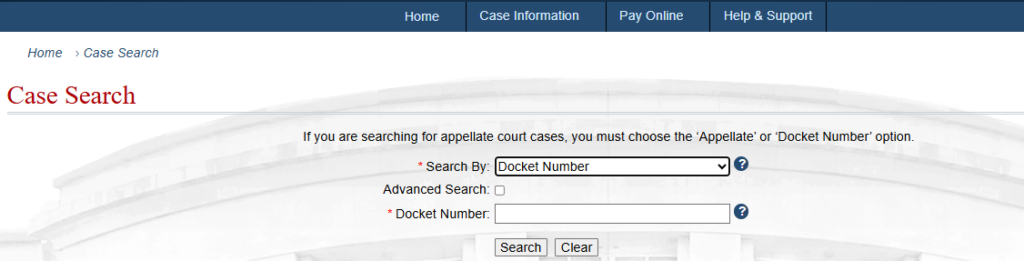
The easiest way to find docket entries in Chester County is through the official Pennsylvania online court portal. The case lookup Chester County process becomes much faster when users search directly on the Pennsylvania Unified Judicial System Portal at: https://ujsportal.pacourts.us
This official online docket tool helps residents check court case updates, filing history, and upcoming hearings. Many people use it for traffic citations, small claims, criminal matters, and civil disputes. The portal provides a trusted way to complete a court record search PA without visiting the courthouse. It works for both Magisterial District Courts and the Court of Common Pleas. Regular docket searches help users stay informed and prepared.
Open the Case Search Page
Users should start by visiting the official search page: https://ujsportal.pacourts.us/CaseSearch
Select the Correct Court Type
After opening the page, users will see different court search options.
They should choose:
- Magisterial District Court
(traffic tickets, small claims, landlord-tenant disputes) - Court of Common Pleas
(criminal cases, civil lawsuits, family matters)
Search by Name or Docket Number
The portal allows two main search methods.
Participant Name Search works best when users only know a person’s name.
Docket Number Search is the fastest option when the case number is available.
Users may enter:
- First and last name
- Full docket number
- Business name (for civil claims)
Filter Results to Chester County
To narrow the search, users should select:
- County: Chester
This step is important since many names appear across multiple counties in Pennsylvania.
Filters may include:
- Filing year
- Case type
- Court office
Click the Correct Case to View Docket Entries
After results appear, users will see a list of matching cases.
Each case shows:
- Docket number
- Filing date
- Court location
- Party names
Role of Chester County Magistrate Court in the Local Judicial System
The Chester County magistrate court serves as a key local judicial office where many legal matters begin. It handles community-level cases such as minor disputes, traffic violations, and the first steps in criminal complaints. As part of Pennsylvania’s magisterial district court system, this court provides a nearby and practical place for resolving everyday legal issues. It supports residents who need quick decisions, law enforcement officers filing charges, and landlords or businesses handling local claims. The court works as a front-line part of the county’s justice process. It helps keep larger courts focused on more serious trials.
A Local Judicial Office Serving Chester County Communities
The Chester County magistrate court plays an important role at the community level. It gives residents a court location close to home instead of requiring travel to the main courthouse. This local judicial office focuses on cases that affect daily life. Many people appear here for small claims, landlord-tenant matters, or traffic citations. The process is more direct than higher courts, which helps resolve disputes faster. These courts are placed throughout Chester County to serve different districts. This local structure supports fairness and convenience.
Residents often rely on this court for:
- Small claims and unpaid debt disputes
- Landlord-tenant complaints and evictions
- Traffic tickets and summary offenses
- Local ordinance violations
District Court Jurisdiction and Case Authority
The Chester County magistrate court operates within specific district court jurisdiction. This means it has legal authority over certain types of cases, but not major trials or jury proceedings.
These courts handle minor civil claims up to a set dollar limit. They also manage early criminal hearings before a case can move forward. The court cannot decide felony trials, yet it plays a major role in the early stages. Its authority helps Pennsylvania courts stay organized by separating minor and serious matters.
District court jurisdiction commonly includes:
- Civil claims under the court’s limit
- Preliminary hearings for misdemeanors and felonies
- Summary criminal offenses
- Emergency orders in certain situations
Entry Point for Criminal Complaints and Law Enforcement Actions
The chester county magistrate court often acts as the entry point for criminal complaints. Many criminal cases begin here before reaching the Court of Common Pleas. Law enforcement officers bring charges to the magistrate level first. The court may hold preliminary arraignments, set bail, and schedule hearings. This early process protects legal rights while keeping cases moving. Judges at this level review whether enough evidence exists to continue the case. This step is important for both public safety and fairness.
Law enforcement uses this court for:
- Filing criminal complaints
- Requesting arrest or search warrants
- Holding arraignments after an arrest
- Setting bail conditions
Resolving Community-Level Legal Disputes
One of the most important functions of the Chester County magistrate court is handling community-level legal disputes. These cases often involve neighbors, tenants, drivers, or small business matters. Many disputes do not require a full trial in county court. The magistrate court offers a structured setting where both sides can present facts. Judges issue decisions based on Pennsylvania law and court rules. This helps prevent small conflicts from becoming long legal battles. It also supports quicker resolutions for local residents.
Common community disputes include:
- Property damage claims
- Contract disagreements
- Security deposit conflicts
- Noise or ordinance violations
Supporting the Full Chester County Court System
The Chester County magistrate court plays a key role in keeping the local justice system efficient. By handling minor matters and early hearings, it reduces pressure on higher courts. This court acts as the first step in many legal paths. Some cases end here with a decision or settlement. Others move upward if they involve serious charges or appeals. This layered structure allows Chester County courts to function smoothly. Residents benefit from faster access to local legal support and organized case processing.
Types of Cases Handled by Magistrate Court Chester County
The Magistrate Court Chester County handles many everyday legal matters, especially minor offenses and local disputes. It serves as a minor case court PA, meaning it focuses on lower-level criminal cases, traffic violations, and small civil claims. This court often becomes the first stop for people facing citations, summary charges, or early criminal hearings. Many cases are resolved quickly at this level without reaching higher county courts. The goal is to address community issues in a fair and timely way. One of the most common case categories involves minor criminal matters known as summary offenses.
Minor Criminal Cases and Summary Offenses
Summary offenses are the lowest level of criminal charges handled in Pennsylvania courts. The Magistrate Court Chester County regularly hears these cases as part of its role as a minor case court PA.
A summary offense is usually a non-violent, lower-level violation of law. These cases often involve behavior that disrupts public order but does not rise to a misdemeanor or felony. Police officers commonly issue summary citations rather than making full criminal arrests. Many summary cases result in fines, court costs, or brief probation in criminal court rather than jail time. Still, they can appear on a person’s record.
What qualifies as a summary offense?
Summary offenses typically involve minor legal violations that are handled quickly in magisterial district court. They do not involve serious injury or major property loss. The court reviews the citation, hears testimony if needed, and issues a judgment. Many people attend a short hearing instead of a full trial. These cases are common across Chester County communities.
Common examples of summary offenses include:
- Disorderly conduct (public disturbances or disruptive behavior)
- Retail theft minor charges under a low dollar amount
- Public drunkenness or similar conduct violations
- Harassment (low-level, non-felony offenses)
- Local ordinance violations
Non-felony offenses at this court level
Most summary offenses are considered non-felony offenses, meaning they are less serious than misdemeanors. Even so, ignoring a citation can lead to higher penalties or a warrant for failure to appear. That is why residents should take summary charges seriously. The magistrate court provides the legal process for resolving these matters early and locally.
Traffic Violations and Citations
Traffic violations are one of the most common case types handled in Chester County magisterial district courts. The Magistrate Court Chester County regularly schedules traffic ticket hearings Chester County residents must attend after receiving certain citations.
A traffic citation is usually issued by a police officer for violating Pennsylvania motor vehicle laws. Many cases involve routine driving issues, yet they still require a legal response. Some citations can be resolved by paying a fine, while others require a court hearing. These matters often connect with PennDOT-related court matters, such as license points or suspensions. Handling a ticket quickly helps avoid added penalties.
Common traffic violations heard in court include:
Traffic court covers a wide range of driving offenses, from minor speeding to more serious insurance or license issues. These cases move through the magisterial court system because they are considered summary-level matters. Even small tickets can affect a driving record over time. Chester County courts review the citation, hear evidence, and issue a decision. Many hearings are short but still legally important.
- Speeding tickets and aggressive driving citations
- Running stop signs or red lights
- Driving without insurance violations
- Driving with an expired registration
- License-related summary offenses
What Happens After Receiving a Citation?
After receiving a traffic citation, the driver must respond by the deadline listed on the ticket. Ignoring it can lead to higher fines or even a warrant for failure to appear. Most citations provide options such as pleading guilty and paying, or requesting a hearing. The court process depends on the type of violation and whether the driver contests the charge. Chester County magisterial courts handle these cases locally and quickly.
Typical next steps include:
This process helps drivers understand their rights and responsibilities after a ticket. Some cases end with a fine, while others involve points added to a license. In certain situations, PennDOT may take further action after the court ruling. Attending scheduled hearings is important to prevent additional legal trouble. The court will provide final instructions once the matter is resolved.
- The driver receives a citation with a response deadline
- The driver may pay the fine or plead not guilty
- If contested, a traffic ticket hearing Chester County is scheduled
- A magisterial district judge reviews evidence and testimony
- The court issues a ruling, fines, or other penalties
Small Claims and Civil Disputes
The Magistrate Court Chester County handles small claims court Chester County cases, which are designed for minor civil cases involving disputes under $12,000. These cases allow residents to resolve financial or contractual issues quickly without hiring a full attorney. Many disputes are between individuals, landlords and tenants, or small businesses and customers. Filing a civil complaint begins the process and gives the court jurisdiction to schedule a hearing and issue a ruling.
Common small claims and civil disputes include:
- Landlord–tenant disputes over unpaid rent or lease terms
- Unpaid debt claims from personal loans or services rendered
- Minor contract disputes or property damage claims
- Other community-level civil matters under $12,000
Landlord–Tenant Eviction Hearings
Eviction magistrate court PA hearings are a major part of Chester County magistrate courts’ responsibilities. These hearings are scheduled when landlords seek to regain possession of property due to rental disputes or alleged lease violations. Eviction cases are handled locally and quickly to protect both tenant and landlord rights. The magistrate judge reviews evidence such as lease agreements, payment records, and notices. Both parties may present testimony, and the court issues a decision on possession or rent owed.
Common landlord–tenant issues handled:
- Nonpayment of rent or fees
- Breach of lease terms
- Property damage or neglect
- Possession hearings to return property to the landlord
Emergency Protection Orders and Warrants
Chester County magistrate courts also issue court-issued orders such as warrants and emergency protection orders. These are high-priority legal actions designed to protect public safety or enforce the law. An arrest warrant PA allows law enforcement to take a person into custody based on probable cause. A bench warrant may be issued if someone fails to appear in court. Emergency orders can also include protection from harassment, domestic abuse, or immediate threats.
Key points about warrants and emergency orders:
- Warrants are enforceable by law enforcement and carry serious consequences
- Emergency protection orders can temporarily restrict contact or access
- Bench warrants result from failing to appear in court for scheduled proceedings
- Both require immediate attention and compliance
Preliminary Hearings in Chester County Magistrate Court
Preliminary hearings in Chester County magistrate courts are an early step in the criminal case process. They are sometimes called probable cause hearings because the court determines whether there is enough evidence to move a case forward. These hearings primarily involve misdemeanor and certain felony charges. The purpose is to protect the accused’s rights while ensuring the case has sufficient merit to proceed to trial in a higher court.
What Happens During a Preliminary Hearing
During a preliminary hearing, the magistrate judge reviews the evidence presented by the prosecution. The defense may cross-examine witnesses or present initial arguments, but these hearings are not full trials. The judge’s role is limited to determining if there is probable cause that a crime occurred and that the defendant may have committed it.
Key points of the hearing include:
- Court review of the criminal complaint or citation
- Testimony from law enforcement or witnesses
- Consideration of any motions or challenges by the defense
- Magistrate decides whether the case proceeds to Court of Common Pleas
Who Attends a Preliminary Hearing
Several parties are typically present at a preliminary hearing in Chester County:
- The defendant — the person charged with the alleged crime
- The defendant’s attorney (if represented)
- Prosecutor or district attorney representing the Commonwealth
- Magistrate judge overseeing the hearing
- Witnesses or law enforcement officers providing testimony
Next Steps After a Preliminary Hearing
After the hearing, the magistrate judge issues a ruling. The possible outcomes include:
- Case held for trial — the judge finds probable cause, and the case moves to the Court of Common Pleas
- Case dismissed — insufficient evidence or legal defects in the complaint
- Adjournment or continuation — if more information is needed before a decision
Court Procedures: What to Expect at a Magistrate Court Hearing
Attending a Chester County magistrate hearing process can feel intimidating for first-time visitors, but understanding the steps makes it smoother. Magistrate courts handle minor court procedures, including traffic citations, small claims, and summary offenses. Knowing what to expect helps residents present their case properly and follow court rules.
Dress Code for a Magistrate Court Hearing
Dressing appropriately shows respect for the court and can create a positive impression with the judge. While there is no formal uniform requirement, a neat and professional appearance is expected.
Tips for proper attire:
- Avoid casual clothing such as ripped jeans, shorts, or tank tops
- Wear collared shirts, blouses, or sweaters
- Closed-toe shoes are recommended
- Avoid hats, sunglasses, or excessive jewelry
Speaking to the Judge
In Chester County magistrate courts, all interactions with the judge should be respectful and concise. The judge oversees minor cases, traffic violations, and preliminary hearings, and expects parties to follow courtroom etiquette.
Key points when speaking to the judge:
- Address the judge as “Your Honor”
- Wait to speak until the judge invites you to
- Speak clearly and respectfully
- Avoid interrupting the prosecution or witnesses
Plea Options in Magistrate Court
For criminal or traffic cases, defendants often have several plea options. Understanding these options helps residents make informed decisions during the hearing.
Common plea choices include:
- Guilty — admit responsibility; the court may immediately issue fines or penalties
- Not Guilty — contest the charges; the case may proceed to trial
- No Contest (Nolo Contendere) — neither admits nor disputes charges; treated similarly to guilty for penalties
Courtroom Rules and Minor Court Procedures
Following courtroom rules is critical for a smooth hearing. Chester County magistrate courts enforce these rules to maintain order and fairness.
Important courtroom rules:
- Arrive early to check in at the clerk’s office
- Turn off cell phones or electronic devices
- Do not eat, drink, or chew gum in the courtroom
- Address all court staff and witnesses respectfully
- Bring all necessary documents and evidence
Paying Fines, Tickets, and Court Fees Online
Residents of Chester County can pay traffic fines Chester County and other minor case fees through the official magistrate court payment system. Many people prefer online payments because they are fast, secure, and avoid unnecessary trips to the courthouse. This system covers summary case fines, small civil fees, and traffic citations. Paying online also ensures that deadlines are met, which helps avoid late fees, additional penalties, or warrants for failure to appear. Users should have their citation number, case number, or docket number handy when making a payment.
How to Make Online Court Payments
The Chester County magistrate court provides an online court payment portal for convenient access. Payments can usually be made with credit/debit cards or electronic checks.
Steps:
- Visit the Chester County online payment portal
- Select Payment Type: traffic fine, summary offense, or court fee
- Enter your citation number or case docket number
- Verify your personal and case information
- Choose payment method (credit card, debit card, e-check)
- Confirm the amount and submit payment
- Save or print the confirmation receipt for your records
Benefits of Paying Online
- Avoid traveling to the courthouse
- Immediate confirmation of payment
- Reduces risk of additional fines or warrants
- Secure and convenient
How to File a Complaint or Civil Claim in Magistrate Court
Residents looking to resolve disputes under $12,000 can use the small claims filing Chester County process to bring a case before the magistrate court. This allows individuals, landlords, or small business owners to pursue legal remedies in a minor lawsuit PA without going to a higher court. The process is structured, straightforward, and designed to handle civil disputes efficiently.
Complete the Required Court Forms
The first step in filing a civil claim is completing the proper forms. These are available at the Chester County magistrate court or online through the Pennsylvania Unified Judicial System portal.
Key forms include:
- Civil Complaint Form for small claims or minor civil cases
- Summons Form to notify the defendant of the lawsuit
- Optional attachments supporting the claim (receipts, contracts, or photographs)
Pay Filing Fees
Once forms are complete, the plaintiff submits them along with the required filing fees. Fees vary depending on the type and amount of the claim.
Filing fee tips:
- Small claims (under $12,000) have a fixed fee set by Chester County
- Fees can usually be paid online or in-person at the magistrate office
- Retain the receipt as proof of filing
Serving the Defendant
After filing, the defendant must be formally notified. This is called “serving the defendant”. Proper service ensures the defendant has legal notice of the claim and hearing date.
Methods of service include:
- Certified mail with return receipt
- Personal service by a sheriff or constable
- Court-approved electronic service (in some cases)
Hearing Timeline
After the complaint is filed and the defendant is served, the court schedules a hearing. Magistrate courts aim to resolve small claims quickly, usually within a few weeks of filing.
What to expect during the hearing:
- Both parties present evidence and testimony
- The magistrate may ask questions for clarification
- Decisions are typically issued at the end of the hearing or shortly after
Warrants and Missed Court Appearances
Failure to appear for a scheduled hearing in Chester County magistrate courts can lead to serious consequences. If a person does not attend, the court may issue warrants Chester County, including bench warrant magistrate court, allowing law enforcement to take the individual into custody. These warrants are a legal enforcement tool to ensure compliance with court orders. Missing a court date, even for a minor civil or traffic matter, can escalate penalties, add fines, and complicate the legal process.
Key points about missed court appearances:
- Failure to appear can trigger a bench warrant immediately
- Warrants may apply to criminal, traffic, or civil cases
- Court summons consequences include additional fines, arrest, or extended case resolution
- Individuals can contact the magistrate court to schedule a warrant removal process or arrange a new hearing
Appeals from Magisterial District Court Decisions
Decisions made in Chester County magistrate courts can be appealed to the Chester County Court of Common Pleas. This process is known as appeal magistrate court PA, allowing parties to request a review of the magistrate’s ruling.
Time Limits for Filing an Appeal
Appeals must be filed within 30 days of the magistrate court’s decision, depending on the case type. Missing the deadline can forfeit the right to appeal. Filing on time ensures the case moves correctly to the next judicial level.
How to File an Appeal
The appeal process involves:
- Filing a Notice of Appeal with the magistrate court that issued the decision
- Paying any applicable appeal fees to the court
- Preparing required documents or evidence for the higher court
- Scheduling a hearing at the Court of Common Pleas
Civil Judgment Appeals
For minor civil cases or small claims, filing an appeal allows the losing party to request a review of the civil judgment. This ensures fairness and gives residents a legal path if they believe the original ruling was incorrect.
Magisterial District Court Locations in Chester County
Here are the main magisterial district court Chester County locations where residents can file cases, attend hearings, and get local judicial assistance. These offices act as local district judge offices and handle minor criminal cases, traffic matters, civil claims, and more across Chester County.
District Court Offices in Chester County
- Magisterial District County 15‑1‑01 – 201 W Market St, West Chester, PA 19382
Handles a broad range of magistrate court matters including preliminary hearings and minor cases. - Chester County District Court (15‑1‑02) – 1572 Paoli Pike, West Chester, PA 19380
Serves West Chester and nearby areas for traffic, summary offenses, small claims, and civil disputes. - Magisterial District Court 15‑1‑04 – 21 W Market St, Suite 100, West Chester, PA 19382
Another West Chester location providing easy access for hearings and filings. - District Court 15‑2‑03 – 601 Westtown Rd, Suite 110, West Chester, PA 19382
Located in the Government Services Center, serving West Chester and western Chester County. - District Court 15‑1‑03 – One City Hall Place, Suite 200, Coatesville, PA 19320 – Phone: 610‑455‑1155
- District Court 15‑4‑02 – Downingtown, PA 19335 (231 Boot Rd) – Phone: 610‑455‑1145
- District Court 15‑3‑04 – Kennett Square, PA 19348 – 914 West Cypress Street – Phone: 610‑455‑1175
Contacting the Chester County Magistrate Court
Reaching the local judicial office contact is essential for filing paperwork, checking schedules, or asking procedural questions. Most offices have clerks available during business hours to assist.
Official Office Hours
- Monday – Friday: Typically 8:30 AM – 4:30 PM (varies slightly by office)
- Closed: Weekends and state holidays
Clerk Office Help
Court clerks can assist with:
- Filing small clams or civil complaints
- Scheduling hearings and retrials
- Answering questions about forms and fees
- Providing case status or docket information
Frequently Asked Questions
Residents often have questions about the magisterial district court Chester County system. These courts handle minor case court PA matters, traffic violations, small claims, and preliminary criminal hearings. Understanding how to access records, pay fines, or check schedules helps residents navigate the legal process efficiently.
How do I find my magisterial district court in Chester County?
Finding your local magisterial district court Chester County office starts with knowing your residence ZIP code. Chester County is divided into multiple district court locations, including West Chester, Coatesville, Kennett Square, and Downingtown. Using tools like the “Find Your District Judge by ZIP Code” feature or the official Pennsylvania Unified Judicial System portal allows residents to locate the correct office for filing cases, attending hearings, or accessing court services.
What cases go to Magistrate Court Chester County?
The magistrate courts handle minor case court PA matters, including summary offenses, traffic citations, small claims under $12,000, landlord-tenant disputes, and early criminal proceedings. These courts serve as the entry point for misdemeanor complaints, preliminary hearings, and local civil disputes. Felony trials or high-dollar civil cases are handled at the Court of Common Pleas, but magistrate courts resolve the majority of everyday community legal issues efficiently.
Can I pay traffic tickets online?
Yes, Chester County residents can make magistrate court payments for traffic tickets and summary case fines using the official online court payment portal at https://ujsportal.pacourts.us/Payment. This system allows drivers to pay traffic violations such as speeding tickets, driving without insurance, and other PennDOT-related court matters securely. Online payments save time, prevent late fees, and ensure that the citation is recorded properly in the docket entries.
How do preliminary hearings work in PA?
A preliminary hearing in Pennsylvania, often held at a Chester County magistrate court, determines whether there is probable cause to proceed with a criminal case. During the hearing, the judge reviews evidence, listens to law enforcement testimony, and allows the defense to present limited arguments. The magistrate decides if the case moves forward to the Court of Common Pleas or if it should be dismissed. Preliminary hearings are crucial in the criminal case process and are a key step in protecting defendants’ legal rights.
Are Chester County magistrate court records public?
Yes, many records from the magistrate court Chester County are public and can be accessed through court record search PA tools. Residents can view docket entries, hearing schedules, and case filings using the Pennsylvania Unified Judicial System portal. Certain sensitive information, such as juvenile or protective order cases, may be restricted, but most minor civil, traffic, and summary offense cases are publicly available. Using the hearing schedule lookup function ensures residents can stay informed about upcoming hearings and case status.